About our Hospital -- CMS Star Rating 3
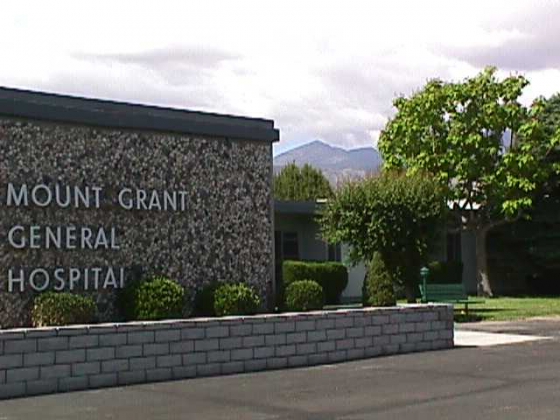
Mount Grant General Hospital is located in Hawthorne, Nevada, 138 miles southeast of Reno, the nearest urban center. A district hospital owned by Mineral County, the hospital serves a resident population of approximately 4500 citizens. Situated on the major southern route to Las Vegas, the hospital also serves those traveling through the state. The hospital has 11 licensed acute beds and 24 long term beds. Administrator Richard Munger served in that position from 1980 until his retirement in 2017. He was a founding member of the Nevada Hospital Association's Rural Council. He was also one of the founding members of Nevada Rural Hospital Partners, a consortium of 14 small, rural frontier hospitals formed in 1988 following the award of a $1.2 million grant from the Robert Wood Johnson Foundation. Hugh Qualls is the current hospital administrator.
In 2005 Mt. Grant General Hospital was designated as one of the nation's top 35 Critical Access Hospitals in Larson Allen's Critical Access Hospital Gold Standard Performance Summary. In a letter addressed to Mr. Munger, David Schuh, CPA and Principal of Larson Allen Health Care said, "This recognition is based on your exemplary financial performance and strength, created by the development and execution of strategies that enhanced your overall economic vitality through attention to physician relations, cost management and market share for a mix of medical and surgical services in the community." Mr. Schuh went on to congratulate Mr. Munger, his Board of Directors and physicians for "your impressive leadership in guiding Mt. Grant General Hospital into expanded opportunities for community service."
Mt. Grant General Hospital is an approved National Health Service Corps (NHSC) Critical Access Hospital site and Rural Health Clinic site. NHSC-approved sites are health care facilities that provided comprehensive outpatient, ambulatory, primary health care services to populations residing in HPSAs. Related inpatient services may be provided by NHSC-approved Critical Access Hospitals (CAHs). The NHSC is a network of more than 9,000 primary health care professionals that provide medical, dental, and mental and behavioral health services in communities, known as Health Professional Shortage Areas (HPSAs), across the county that have limited access to health care. The NHSC is administered by the Bureau of Clinician Recruitment and Services (BCRS) in the Health Resources and Services Administration (HRSA) of the U.S. Department of Health and Human Services (HHS).